The Zambezi carries ten times more water in April than it does in October. Everything else, what you see, what you can do, where you should stand, follows from that one number.
Guests ask us this more than any other question, and the honest answer is that there is no single best month. There is only the trade you want to make.
Victoria Falls is fed by a river that changes more across a year than almost any river on earth. At its April peak the Zambezi pours over the lip at around 3,007 cubic metres a second. By October it is down to 293. That is roughly a tenth of the water, over the same rock, in the same year. Everything else – what you can see, what you can raft, where the elephants are, which bank you should stand on – follows from that one number.
We have watched every month of that cycle from this side of the gorge. Here is what each part of the year gives you, and what it takes away.
The water going over the Falls did not fall as rain here
This is the part almost nobody explains, and it is the key to the entire calendar.
Our rainy season runs from November to March. But the Falls do not peak in March. They peak in April and early May, weeks after the last storm has passed. And the river drops to its lowest point in late November or early December, well after the rains have already begun.
The reason is geography. Most of the water that goes over the Falls fell a thousand kilometres upstream, in Angola and in Zambia’s Western Province; around 87 per cent of the upper Zambezi catchment lies inside Angola. On its way to us it has to cross the Barotse Floodplain, a vast seasonal wetland that swallows the flood, spreads it out and releases it slowly. Zambezi floodwater takes four to six weeks simply to cross the Barotse Plain.
So the storm you watch from our verandah in January is the water you would see going over the Falls in March. If you have come for the spectacle, you come after the rain. If you have come for the river itself – to raft it, to swim in it, to stand on the lip of it – you come before.
The year in one chart
Rain peaks in December and January. The river peaks in April. The gap between them is the Barotse Floodplain doing its work.
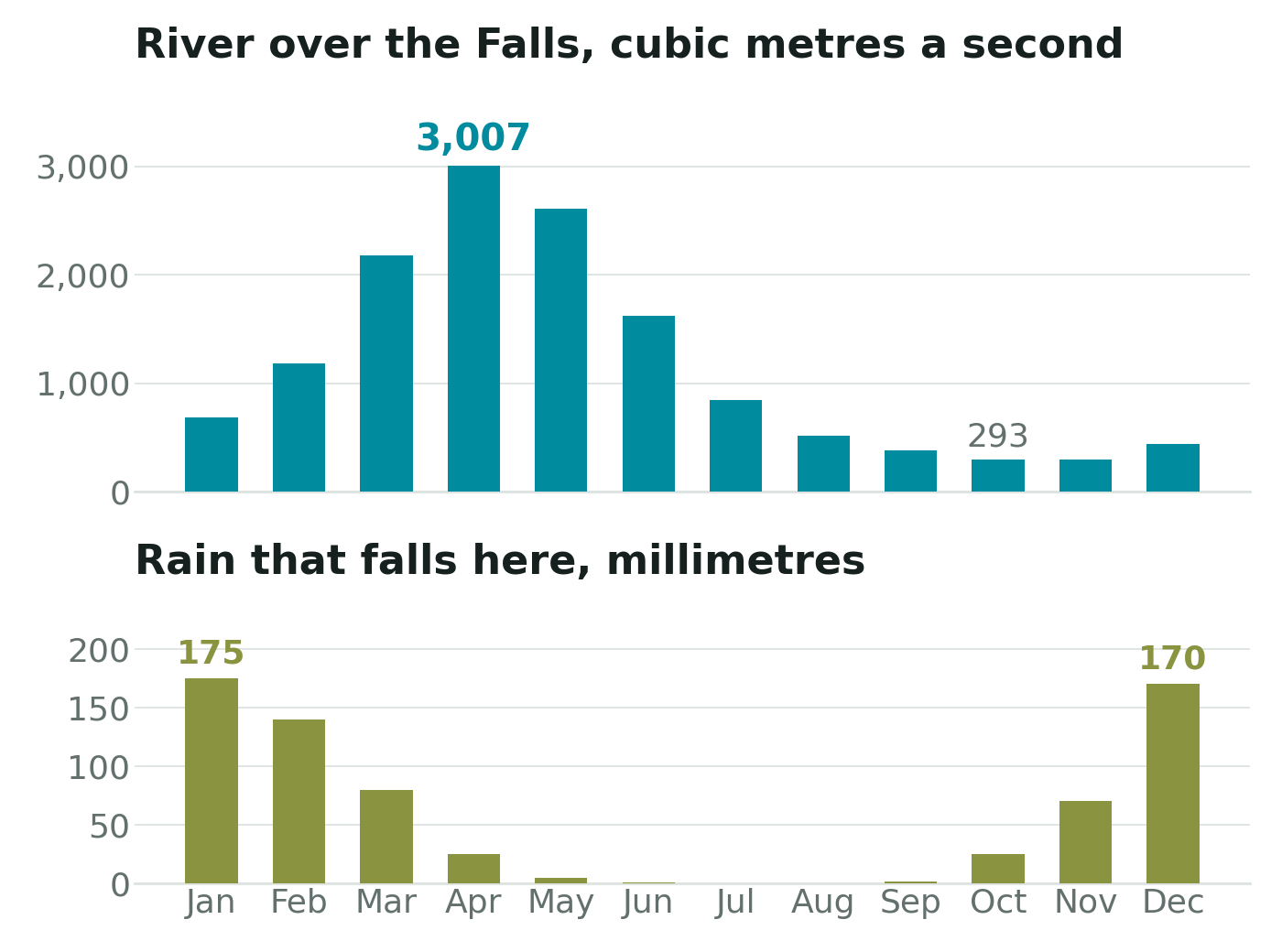
Flow is the mean for each month across fifty-one years of gauged record at Victoria Falls. Rainfall is the 1991 to 2020 average.
Month by month
JANUARY TO MARCH
The green season
The river climbs hard through these three months: 686 cubic metres a second in January, 1,184 in February, 2,175 by March. That is the Barotse flood arriving. In January you can still see the rock face and read the shape of the gorge; by March there is real thunder in it, and real spray.
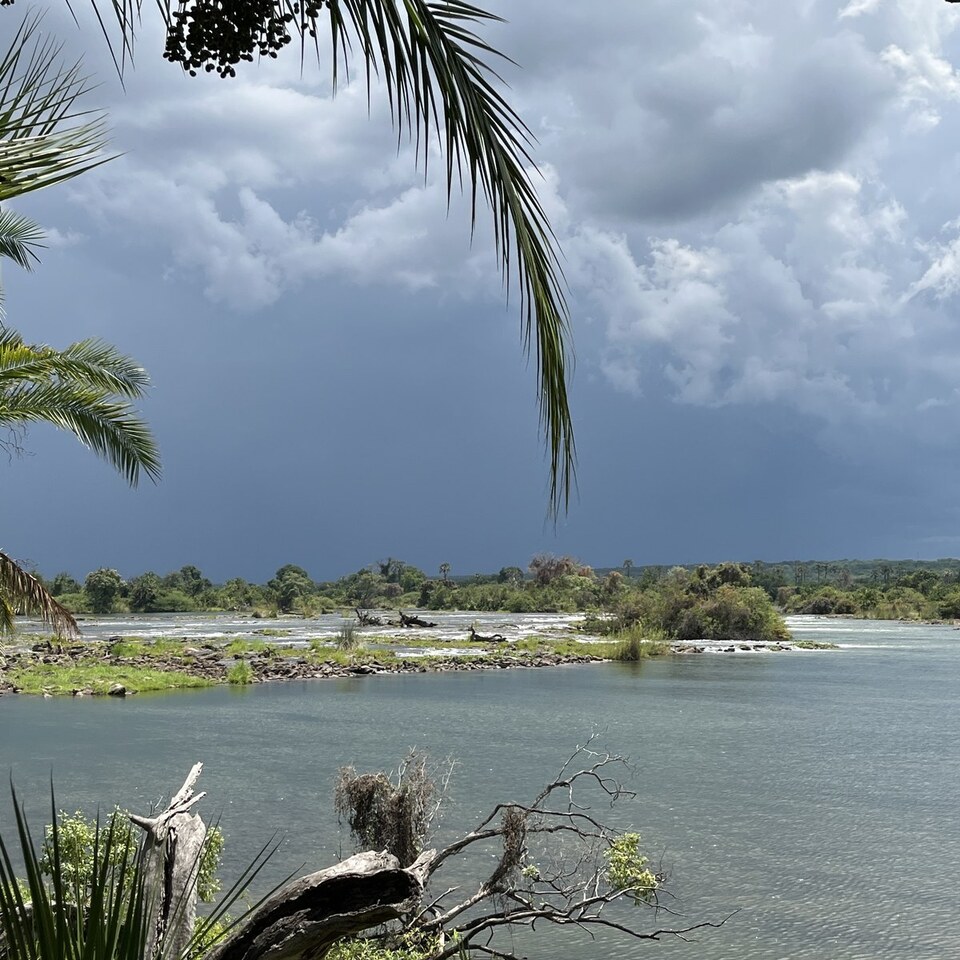
It is hot – around 29 to 30°C most days – and humid, with storms that build through the afternoon and clear by evening. January and February bring roughly 175mm and 140mm of rain, mostly in short heavy bursts rather than all-day grey.
If you are travelling from the Northern Hemisphere, this is the stretch of the year when the gap is widest. Through January the sun is up here for thirteen hours a day, while London manages just over eight and Amsterdam a little less.
What it gives you. The greenest country of the year and the most dramatic skies. Exceptional birding, as the migrants arrive in breeding plumage. Our own Green Season offer – dinner, bed and breakfast at bed-and-breakfast prices – runs from the first of November to the thirty-first of March, on stays of three nights or more. And rafting, though as the shortened high-water trip that puts in at rapid 11, ten kilometres downstream, rather than the full descent from the Boiling Pot.
What it takes away. Game viewing is harder work: the bush is thick, there is standing water everywhere, and nothing is forced down to the rivers to drink. Devil’s Pool is closed. And you will get wet, from above and from below.
APRIL TO JUNE
Peak flood
April is the biggest water of the year at 3,007 cubic metres a second, ten times the October low. May is barely behind it at 2,613.
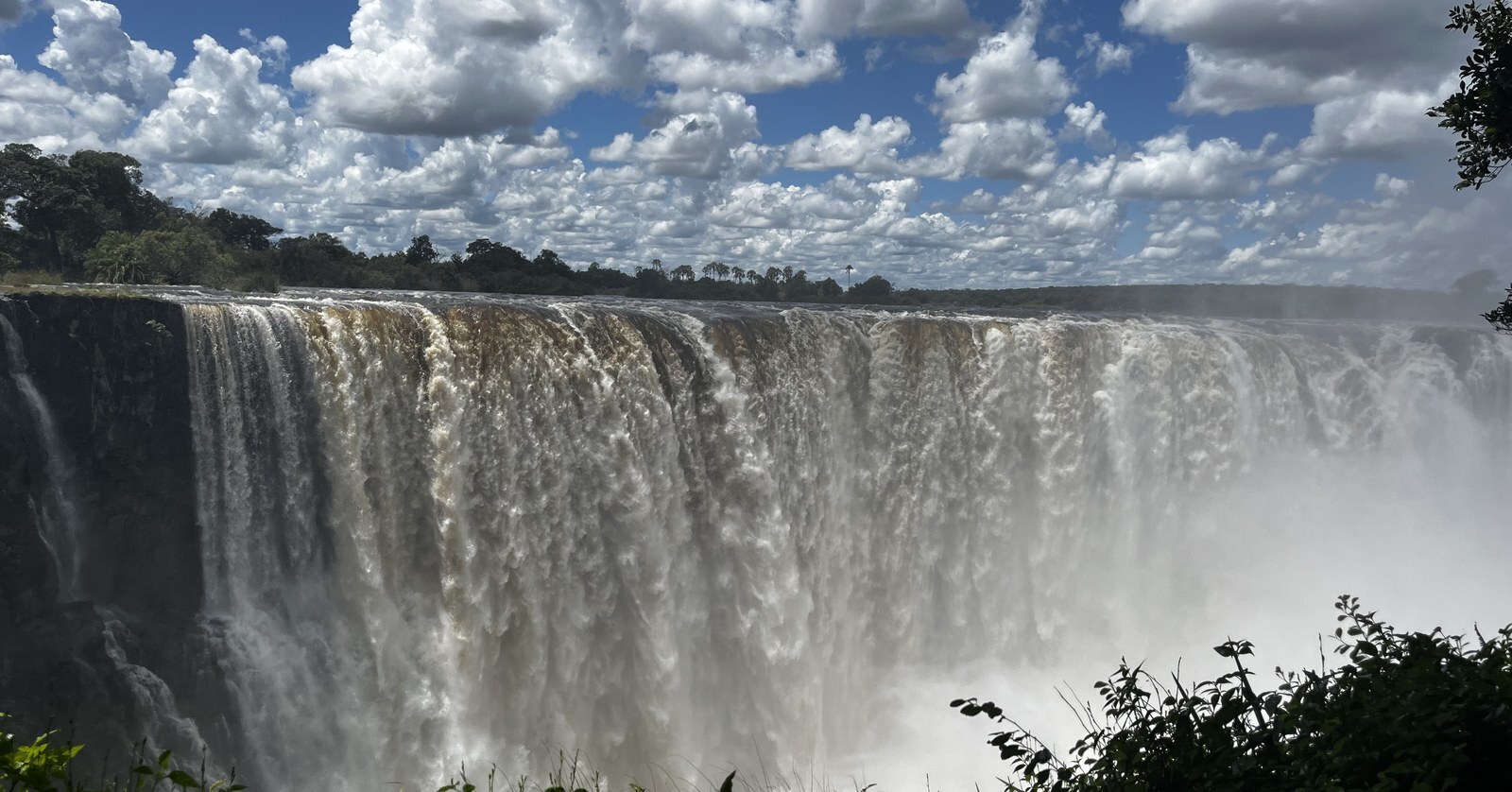
This is Victoria Falls at full voice and it is genuinely overwhelming. You feel it through the ground before you see it. It is also, and this surprises people, the hardest time of year to photograph. The spray rises so high that the full width of the Falls cannot be seen on foot from either bank, and the rainforest walk is a soaking. Bring a proper raincoat rather than a poncho, and a dry bag for anything electronic.
The rain stops around April. May and June are dry, clear and cooling quickly: June nights average 7°C, which catches most visitors out.
What it gives you. The single most powerful sight in the whole cycle. A rainforest at its most vivid. And the strongest months of the year for the lunar rainbow, which needs heavy spray and a clear sky on the same full-moon night. The park opens for three nights each month, the night before the full moon, the night of it, and the night after.
What it takes away. Rafting is usually suspended for about a month either side of peak flow, which falls in the first week of May, so broadly early April to early June. Livingstone Island, and with it Devil’s Pool, closes from April to mid-June. And the view is frequently lost inside its own weather.
july to september
The clear season
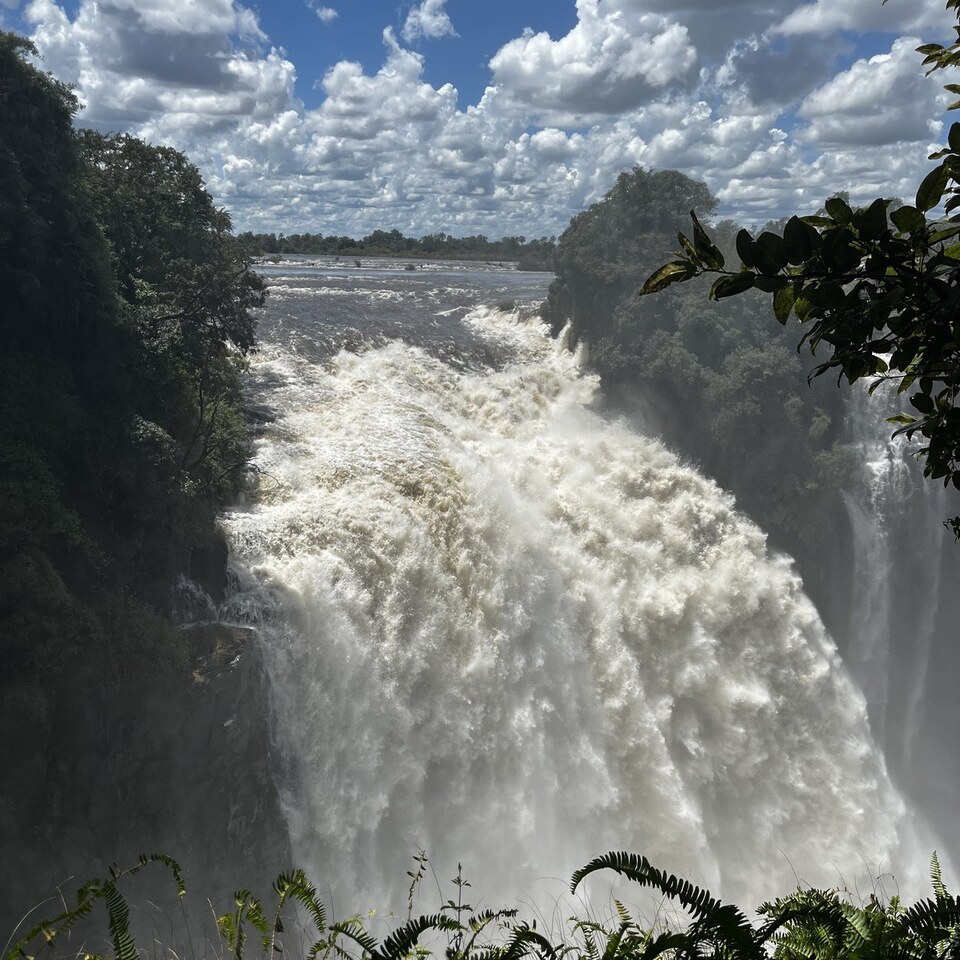
The flood drains away: 1,621 cubic metres a second in June, 845 in July, 519 in August, 376 in September. The view improves every week of it.
These are the classic months. Dry, cloudless, around ten hours of sunshine a day, warm through the afternoon and genuinely cold at dawn. July averages 6°C at first light and a cold morning sits nearer 2°C. September is the turn of the year: 32°C days, dust, and a bush stripped back to its bones.
What it gives you. The best all-round visit. Enough water for the Falls to be spectacular and little enough for you to actually see them. Game builds steadily across the whole region as the inland pans dry out and the animals are pushed back onto permanent water, which is why Chobe, an easy day trip across the Kazungula border, is at its best in exactly these months. Livingstone Island reopens in mid-July and Devil’s Pool usually from mid-August. Low-water rafting, the full run launching from the Boiling Pot below the Falls, opens around mid-August.
What it takes away. This is peak season, and the most visitors of the year. And pack a fleece for game drives, because it really is cold before the sun comes up.
october to december
Low water and big skies
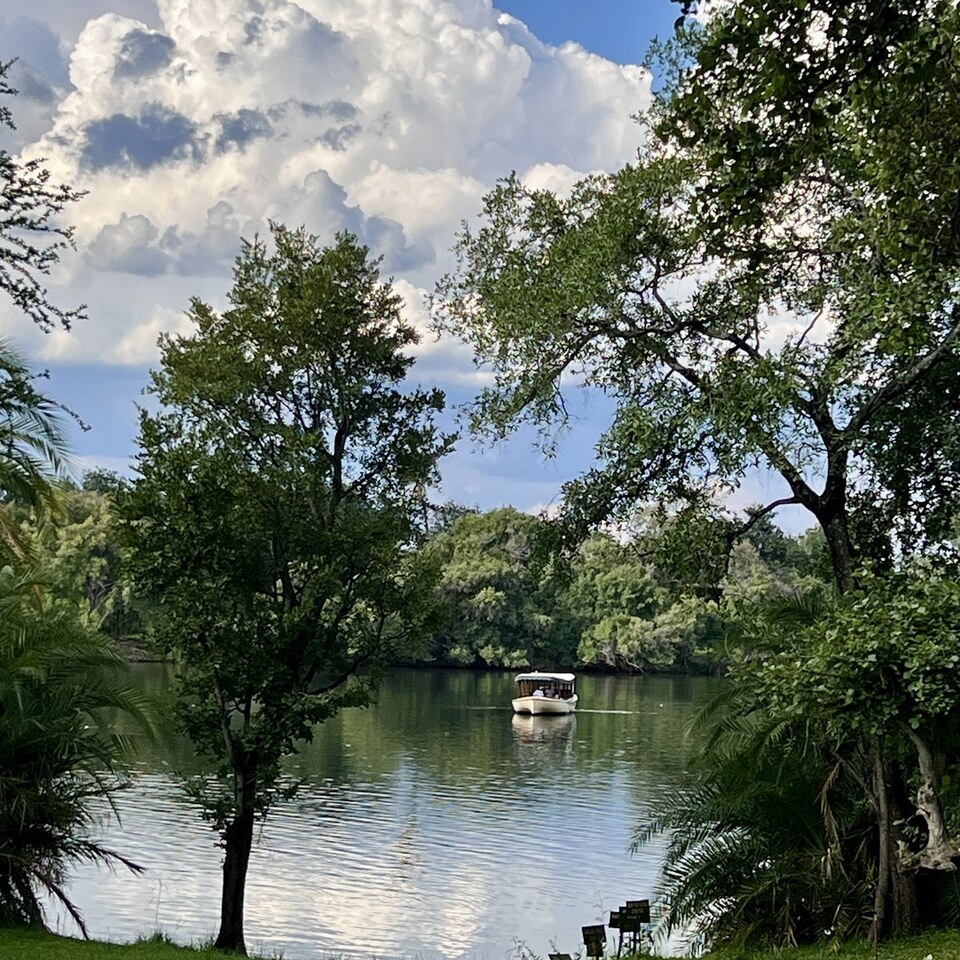
October is the hottest month of the year here. It averages 34°C in the afternoon, but that is the average. The hot days reach about 39°C, and the highest temperature ever recorded at Victoria Falls is 41°C, set in October. There is almost no rain, and the river bottoms out at 293 cubic metres a second in October and 297 in November.
At that level the water concentrates on the deeper Zimbabwean side, which is why this bank is the reliable one in these months, while across on the Zambian side parts of the Eastern Cataract thin to rivulets or dry to bare rock. What you are looking at is the geology – the basalt face, the drop, the whole architecture of the gorge – rather than a wall of white.
What it gives you. The best wildlife of the entire year, because every animal in the region is now tied to permanent water; Chobe’s riverfront in September and October is as good as game viewing gets in southern Africa. The full rapids 1 to 19 rafting run, launching in the Boiling Pot in the Falls’ own spray. Devil’s Pool through to late December. And skies that go on forever.
What it takes away. The Falls are at their least dramatic. If sheer volume of water is what you came for, these are not your months, though a helicopter flight will give you the whole span in a single frame, which at high water the spray simply will not allow.
The first rains usually break in November and by December the river is already climbing again, up to 438 cubic metres a second and rising.
It is not one waterfall, and that is why the season matters
Victoria Falls is 1,708 metres wide and drops into a chasm that averages 100 metres deep and reaches 108 at its deepest. But the lip is not level, and the five named sections fall different distances: Devil’s Cataract 61 metres, Main Falls 83, the Eastern Cataract 98, and Rainbow Falls 99 – the tallest of them, and on our side.
That uneven lip is the whole reason the Falls change character through the year. As the river drops it abandons the shallower sections first, and it abandons them from the Zambian end. Devil’s Cataract has the lowest lip on the whole face, so it is the last to run dry, and Main Falls carries the greatest volume of the five. Both of them are on our side, and both are spectacular in every month of the year. It is the Eastern Cataract, at the Zambian end, that thins to rivulets in October and November and in some years to bare rock.
Below the lip the river has done this before. The gorge zigzags through eight successive canyons over roughly 150 kilometres downstream, each one a former Victoria Falls, cut along a crack in the basalt and then abandoned as the river worked its way back. The gorge you look into today is simply the current one.
At full flood the spray column climbs around 500 metres and can be seen from thirty to fifty kilometres away, which is where the local name comes from: Mosi-oa-Tunya, the smoke that thunders. UNESCO inscribed the Falls in 1989 as a single property shared between Zimbabwe and Zambia, and they are widely listed among the seven natural wonders of the world.
The five sections, and how far each one falls
The five named sections fall different distances, and as the river drops it abandons them from the Zambian end. Devil's Cataract has the lowest lip on the whole face, so it is the last to run dry.
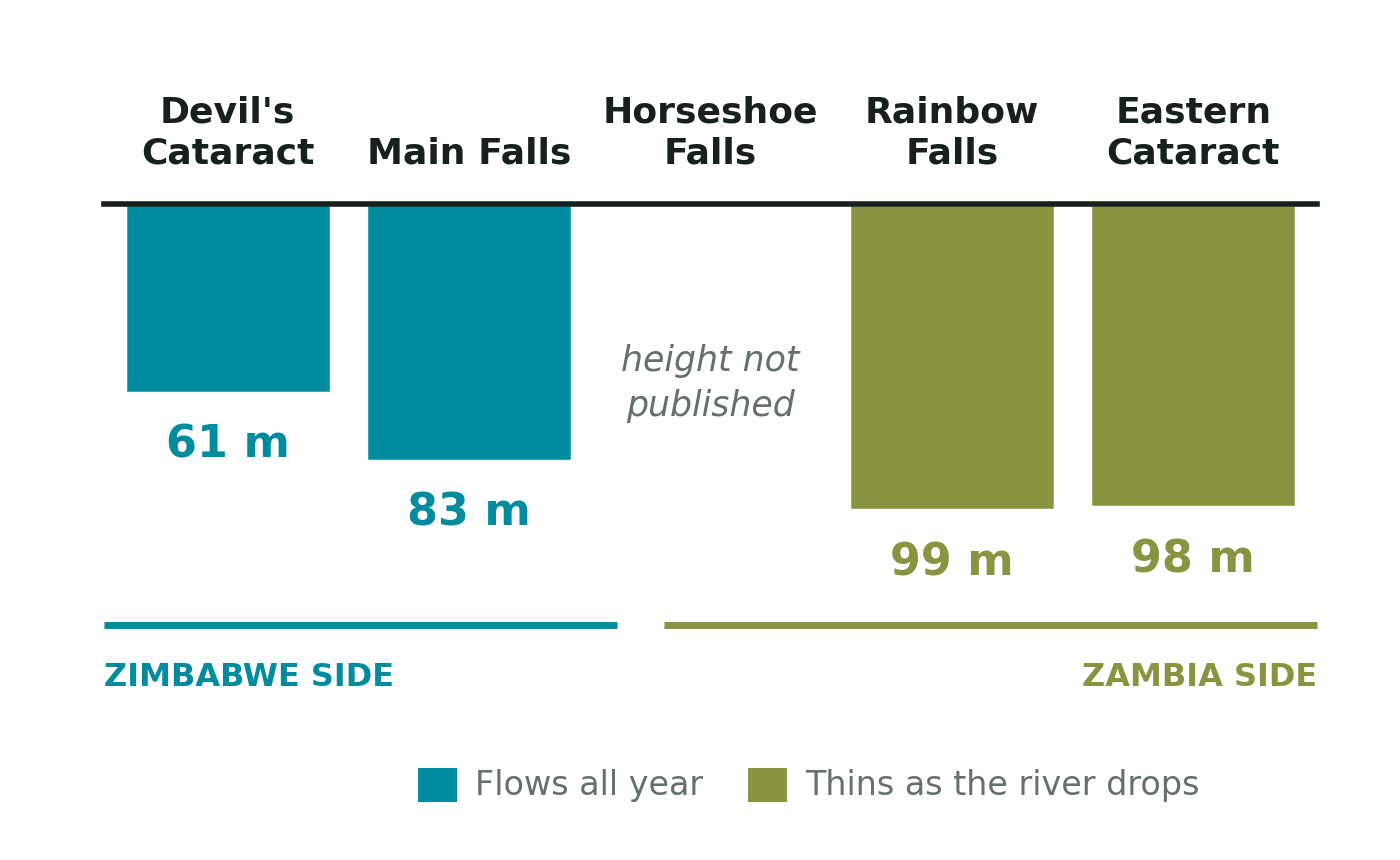
Heights from UNESCO's World Heritage listing. The chasm averages 100 metres deep and reaches 108 at its deepest. Horseshoe Falls has no separately published height.
If you want both the power and the view, come in June
Most guides send you to August or September, and for game viewing and adventure they are right. But if what you actually want is a wall of water you can still see, the flow record points somewhere else.
June carries 1,621 cubic metres a second, more than half the April peak and five times the October low. September carries 376, which is barely above the annual floor. So September gives you clarity with a thin river; June gives you a genuinely large Falls with the spray already dropping away and the skies clear. It is the true middle of the year’s range, and almost nobody recommends it.
Water over the Falls: Rising fast, 686 to 2,175
Clear view of the Falls: Good in January, spray by March
White-water rafting: High-water run, from rapid 11
Devil’s Pool: Closed
Livingstone Island: Closed
Lunar rainbow: Building
Game viewing: Thick bush, animals dispersed
Birding: Exceptional, migrants in plumage
Rain: 175, 140, 80mm
Our Green Season offer: Yes, to 31 March
Water over the Falls: Peak, 3,007 in April
Clear view of the Falls: Often lost in spray
White-water rafting: Usually closed, April to early June
Devil’s Pool: Closed, island shut April to mid-June
Livingstone Island: Closed April to mid-June
Lunar rainbow: Strongest, April and May
Game viewing: Improving week by week
Birding: Good
Rain: 25, 5, 1mm
Our Green Season offer: No
Water over the Falls: Falling, 1,621 to 376
Clear view of the Falls: Best of the year
White-water rafting: Full run reopens mid-August
Devil’s Pool: Opens around mid-August
Livingstone Island: Reopens mid-July
Lunar rainbow: Strong, clearest skies
Game viewing: Very good, building
Birding: Resident species
Rain: Effectively nil
Our Green Season offer: No
Water over the Falls: Lowest, 293 in October
Clear view of the Falls: Bare rock, low drama
White-water rafting: Full run, rapids 1 to 19
Devil’s Pool: Open to late December
Livingstone Island: Open to early January
Lunar rainbow: Weakest
Game viewing: Best of the year
Birding: Migrants arrive from November
Rain: 25, 70, 170mm
Our Green Season offer: Yes, from 1 November
The things that do not change
A good deal of what makes Victoria Falls worth the flight runs all year, whatever the river is doing.
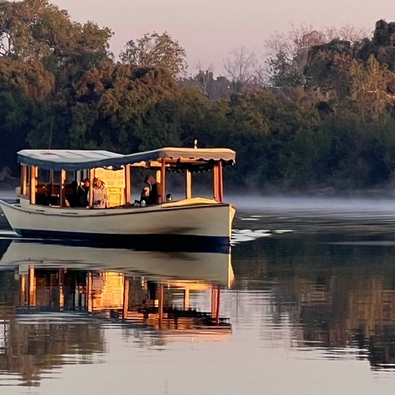
Every Evening
Sunset here barely moves: 17:48 in early June, 18:59 in mid-January, about seventy minutes across the whole year. Cruises board roughly two hours before it, with the best colour coming a quarter of an hour after the sun has gone. Helicopter flights over the gorge.
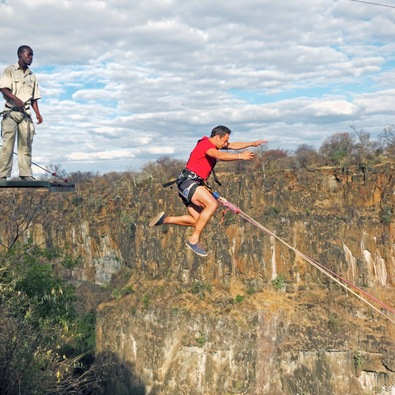
Rigged above the river
The gorge activities are worth singling out, because people assume they follow the river and they do not. The gorge swing, the zip line, the flying fox and the canopy tour are all rigged cliff to cliff, high above the water, so they run in every month regardless of what the Zambezi is doing. If you are coming at peak flood when rafting is shut, they are still there.
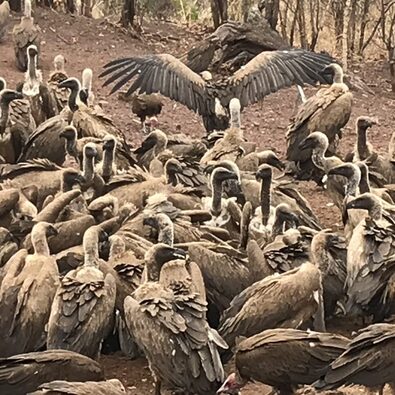
Vulture Feeding
The vulture feeding, thirty minutes, free to watch, every day of the year. Four species come in: white-headed, hooded, lappet-faced and white-backed. It is one of the few places you will see them this close.

The Big Tree
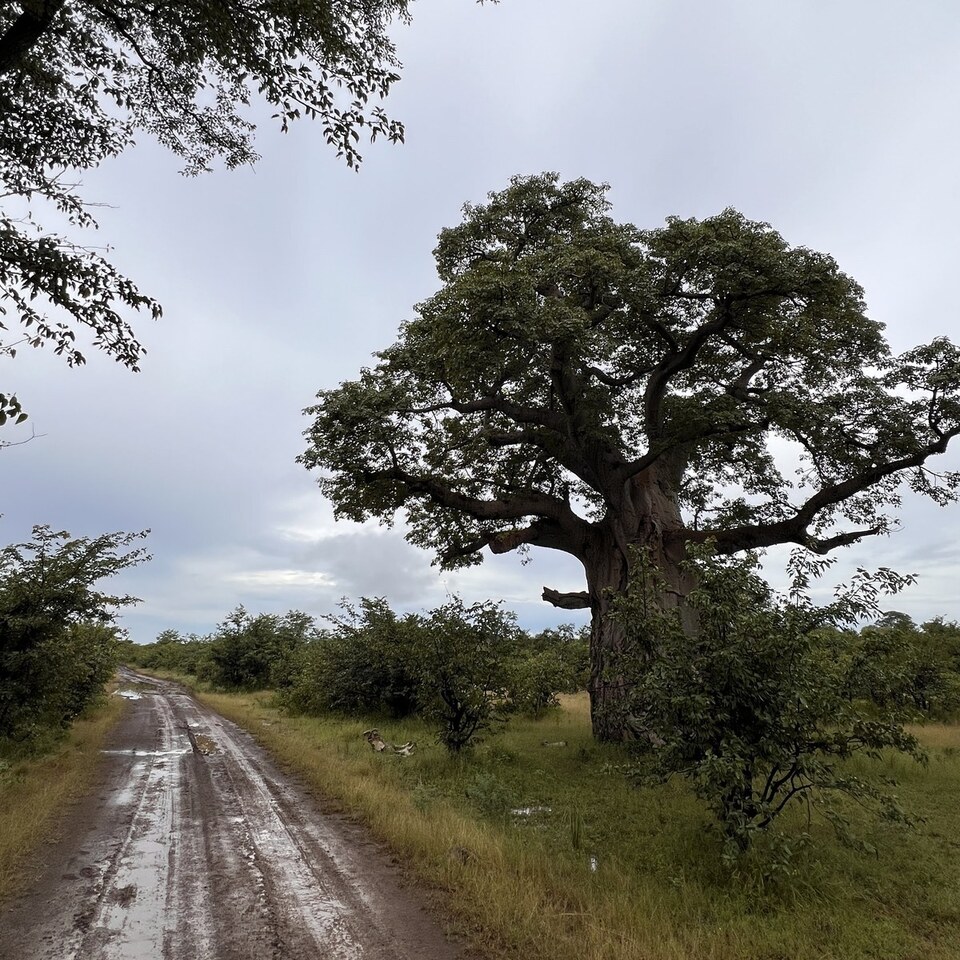
The Big Tree, a baobab radiocarbon-dated to around eleven hundred years old.
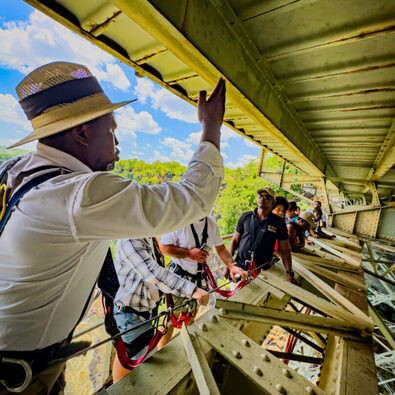
Historic Bridge Tour
The bridge tour, out along the catwalks underneath the deck
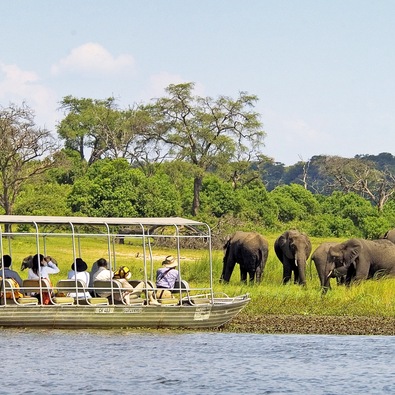
Chobe Day Trip
Chobe as a day trip across the Kazungula border.
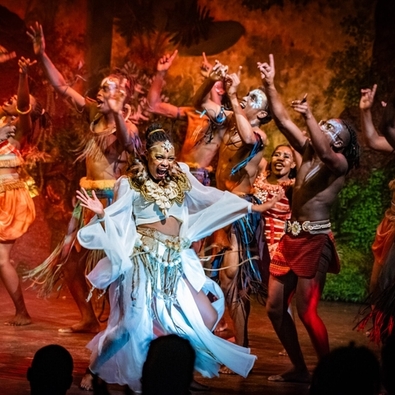
Simunye Show
This live, vibrant, theatrical production showcases local professional artists in an intimate 180-seater open air theatre.
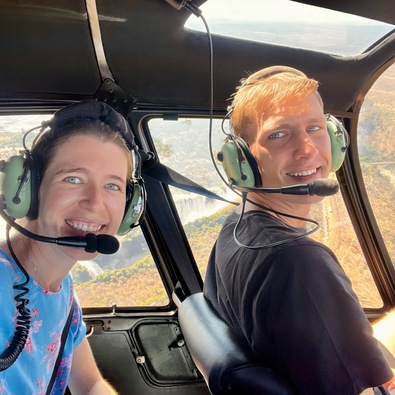
Helicopter Flights
Helicopters fly from this side, every day of the year.
Visas, cash and what to pack
A few honest words about the wildlife
Zimbabwe Parks lists two hazards inside the Rainforest, and they are not the ones people expect: the cliff edges and the wet rock. There are unfenced drops and the basalt is slick wherever the spray reaches. Stay on the footpaths, which also protects the forest floor.
Baboons and vervet monkeys live in the park and have worked out what a carrier bag means. Do not feed them and do not let them get close to food. A baboon that has learned to take from people becomes a problem for everyone who comes after you.
And the town itself is inside elephant country, not next to it. Elephants move through Victoria Falls, and in July 2026 Parks temporarily restricted access to the Rainforest after one was seen inside it. This is a live issue here rather than a charming one: people have been killed. Our advice is simple and we give it to every guest: do not walk back from town after dark. Call us and we will arrange a taxi to fetch you.
On the river, the upper Zambezi holds hippo and crocodile along its whole length. Swimming is for the pool here and for the supervised rock pools at the lip of the Falls, where guides check the water first. Nowhere else.
Check the river for yourself
Every date on this page is typical rather than fixed. The Zambezi’s flood shifts by weeks from one year to the next, and every operator here sets its season by water level rather than by the calendar.
You do not have to take our word for any of it. The Zambezi River Authority is the bi-national body that gauges the river, and it publishes the measured flow at Victoria Falls every fortnight, the same figures this page is built on. Look up the season you are considering, set it against the table above, and decide for yourself. zambezira.org/hydrology/river-flows
Pamarah Lodge is fourteen rooms on Nguhwuma Crescent, ten minutes from the Falls, with a pool, a bar called The Prop & Rotor and an activity desk that books all of the above at no charge. We have been on Tripadvisor’s Best of the Best list. Come and see what the river is up to.
Stagione Verde: cena, pernottamento e colazione ai prezzi B&B
Bed & Breakfast
BB Più giorni = più economico fino al 15% di sconto
Cena, Pernottamento e Prima Colazione
HB Più a lungo = più economico fino al 15% di sconto
7 Night Spectacular Package for 2 Guests
Pacchetto Prima Classe di 3 Notti
Pacchetto Classe Business di 3 Notti
Pacchetto Economico di 3 Notti