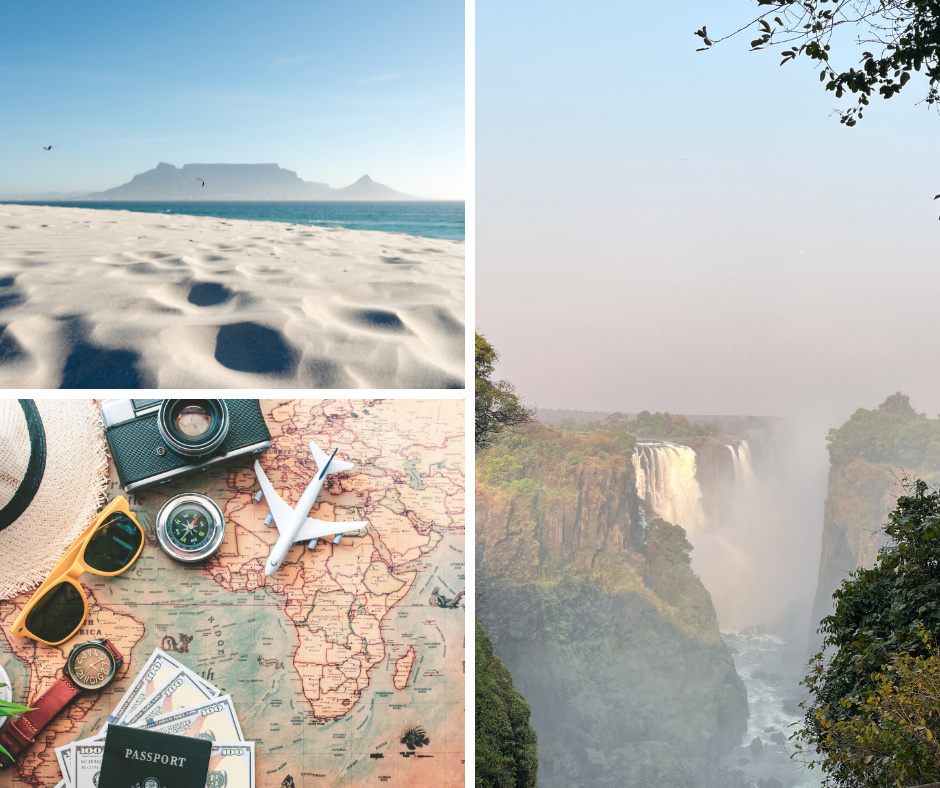
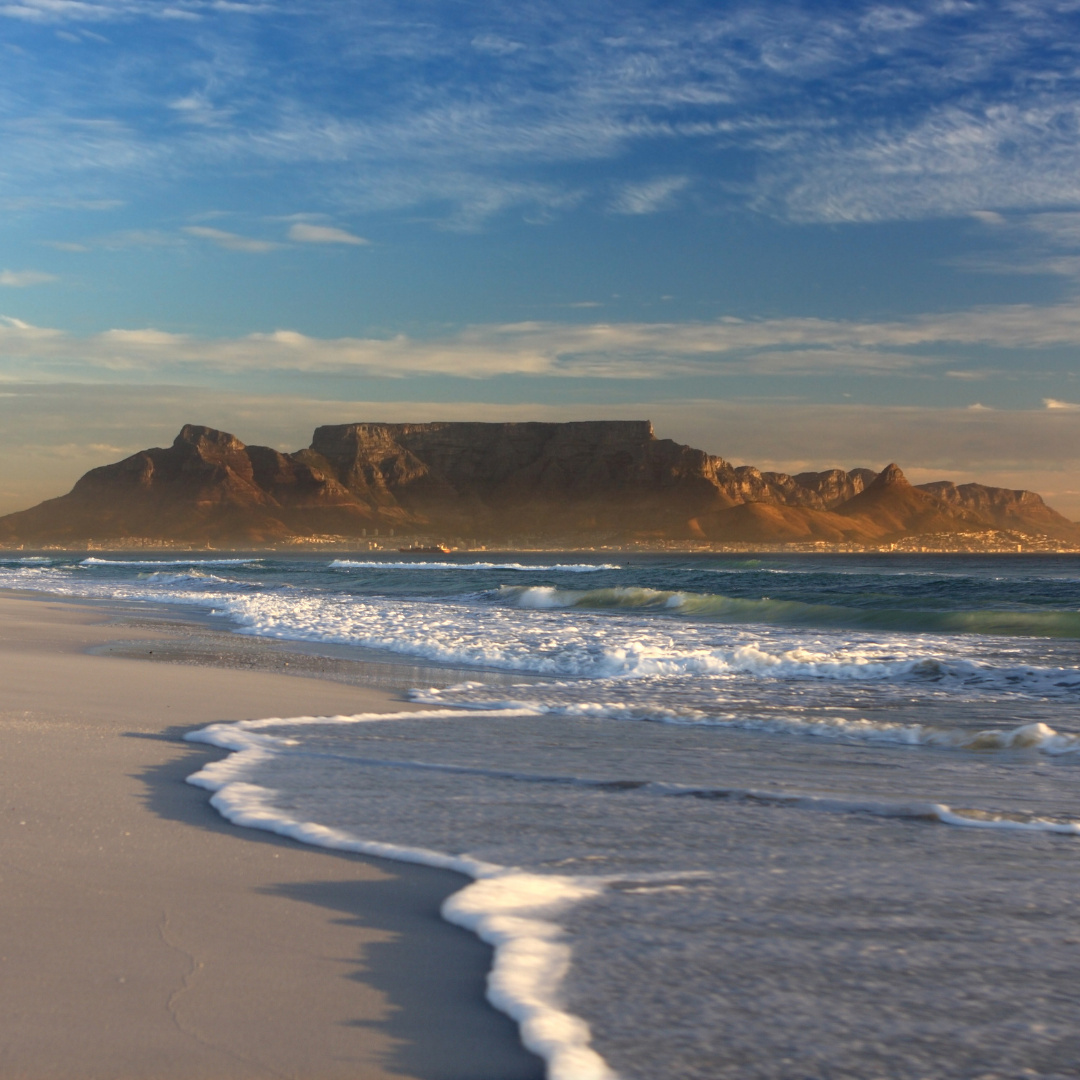
If you are coming to Cape Town between January and March, you have chosen the best three months of that city’s year. Twenty-eight degrees, under thirteen millimetres of rain a month, and the sun still up at eight in the evening in January.
What most visitors do not realise is that the largest sheet of falling water on earth is two hours and fifty-five minutes away, on a non-stop flight.
Cape Town in January is at its most expensive and most booked. You are not adding another week of the same holiday. You are adding a different country, and two more within reach of a day trip.
There are two windows worth planning around, and they are not the one most people pick. The first three weeks of December, and the stretch from mid-January to early March. Both are set out below, along with the one week we would steer you away from.
The window
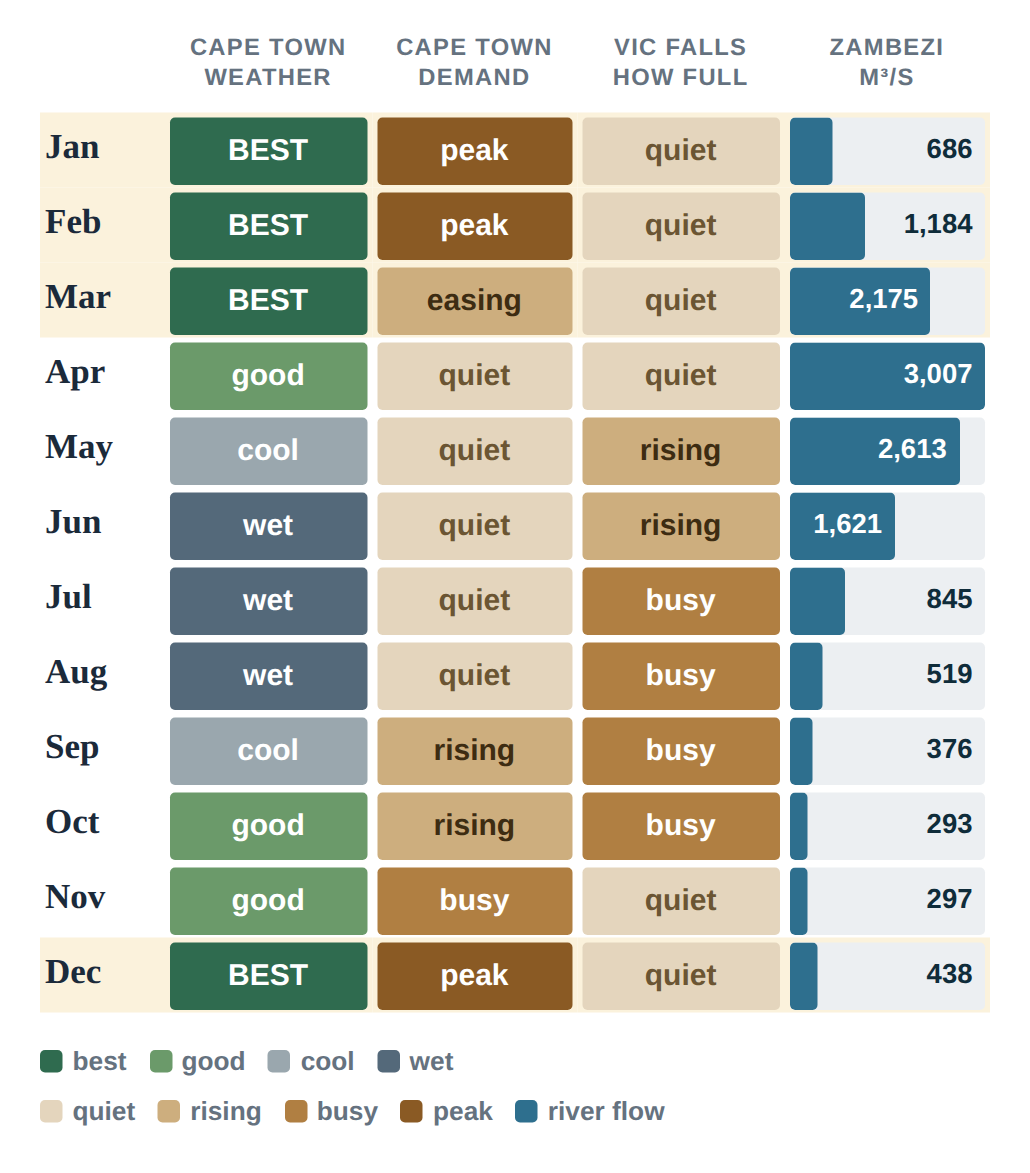
The two destinations run on opposite calendars, and the overlap is the point of this whole page. Cape Town is at its best from January to March and again in early December. Those are the same weeks we are at our quietest, and the same weeks the Zambezi is refilling after the dry.
Window 1, 1 to 20 December. Our emptiest three weeks of the year, and the last of the year with Devil’s Pool and the full rafting run still open.
Window 2, mid-January to early March. Cape Town at its best, our Green Season offer running, and the river filling week by week.
Cape Town demand is drawn from Airports Company South Africa passenger figures and the South African school calendar. Victoria Falls rate seasons come from published lodge calendars in town. Flow figures are from Moore and others, 2007, Table 15.2.
The two places, side by side
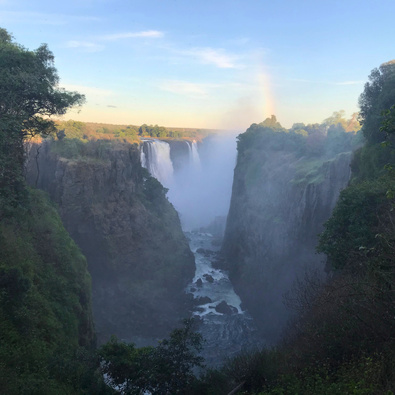
Early December
Cape Town 26°C, 13mm of rain. Victoria Falls 30°C, 170mm. The Zambezi over the Falls at 438 cubic metres a second.
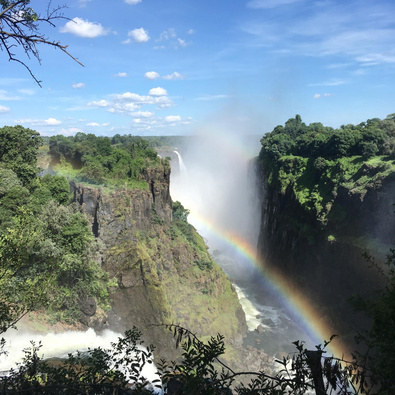
January
Cape Town 29°C, 9mm of rain. Victoria Falls 29°C, 175mm. The Zambezi over the Falls at 686 cubic metres a second.
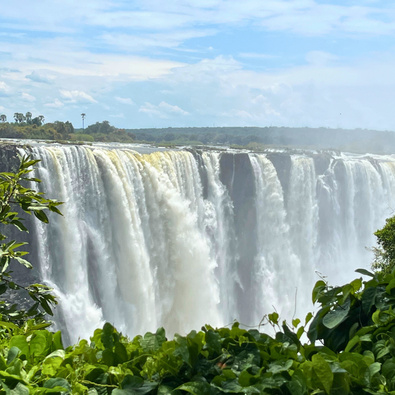
February
Cape Town 28°C, 10mm of rain. Victoria Falls 30°C, 140mm. The Zambezi over the Falls at 1,184 cubic metres a second.
March
Cape Town 26°C, 13mm of rain. Victoria Falls 30°C, 80mm. The Zambezi over the Falls at 2,175 cubic metres a second.
The flight between the two is two hours and fifty-five minutes, non-stop.
December is Victoria Falls’ wettest month and the river’s lowest, and both are in the table deliberately, because this page argues for early December on what is open rather than on the weather. Our rain is real, but it falls in short afternoon storms rather than all day, and January still averages fifteen days with no rain at all.
Cape Town figures are 1991 to 2020 South African Weather Service normals. Victoria Falls figures are 1991 to 2020 normals for the town.
Under three hours, and no Johannesburg
Under three hours, and no Johannesburg
Airlink flies Cape Town to Victoria Falls non-stop, daily, on an Embraer E190. Two hours and fifty-five minutes, morning departure, arriving early afternoon, which means you can have breakfast at the V&A Waterfront and be watching the sun go down over the Zambezi the same day.
Kenya Airways also carries passengers non-stop on the same route several times a week, on the Nairobi service that calls at Victoria Falls. If the day you want is full, Johannesburg is the fallback, with something like thirty-eight departures a week onward to Victoria Falls and a total journey of five to six hours.
Compare that with what it costs, in time, to add anything else of this scale to a South African holiday. And one air ticket does not buy you one country here. It buys three. You sleep in Zimbabwe, cross the Kazungula border into Botswana for a day in Chobe, and walk over the border bridge into Zambia for the Knife-Edge, which changes more across the year than any other viewpoint here: bare rock in December, when you can read the lip of the chasm like a cross-section, and a soaking walk by March. One KAZA UniVisa can cover all three. Please confirm current schedules when you book, because routes do change.
Two windows, and what the festive week really looks like
Most people who add Victoria Falls to a Cape Town summer pick the week between Christmas and New Year, and we used to think that was the one week worth steering people away from. Our own figures say otherwise, and they have changed fast.
The festive window here has fallen from ninety per cent full two years ago to fifty per cent last year, and the shape inside it has changed more than the average shows. Christmas itself has gone very quiet; it is New Year that still fills. So there is room over Christmas, at a time of year most people assume there is none, and our Green Season offer runs straight through it.
Either side of that week, the place is genuinely quiet.
Window one: the first three weeks of December
This is the window nobody markets, and on paper it makes no sense, until you look at what is actually open. Devil’s Pool is still running, and closes around the end of the month. The full white-water rafting descent, launching in the Boiling Pot below the Falls and running rapids 1 to 19, is still going and also stops around the twenty-fifth. From January, both are gone until August.
The river is at its floor and beginning to climb, so you can see the whole rock face, the gorge and the drop. The first rains have broken the October heat and the country has gone green in a fortnight. And Cape Town in early December is already at full summer but the South African schools have not broken up yet.
Our Green Season offer runs from the first of November, so early December carries it too: dinner included every night, at bed-and-breakfast prices, on stays of three nights or more. That is the part that surprises people. The fullest month of activities in the Victoria Falls year is the one nobody puts on an itinerary.
So the first three weeks of December are the only time in the year that puts the complete activity list, the quietest lodge and a Cape Town that is warm but not yet heaving into the same fortnight.
Window two: mid-January to early March
By about the twelfth of January the South African schools have gone back and Cape Town loosens considerably while the weather stays exactly as it was. February and early March are Cape Town at full summer with the crush gone. Our Green Season offer runs through to the thirty-first of March, so the whole of this window carries it.
Here the Falls are the draw rather than the activities. The month you pick decides which river you meet: January runs at 686 cubic metres a second, which still lets you read the rock face and the shape of the gorge, while March is at 2,175 and has real thunder in it. Devil’s Pool is closed and rafting has moved to the shortened high-water run, so this is the window for people who came to see the Falls rather than to swim at the edge of them.
What the Falls are doing while you are here
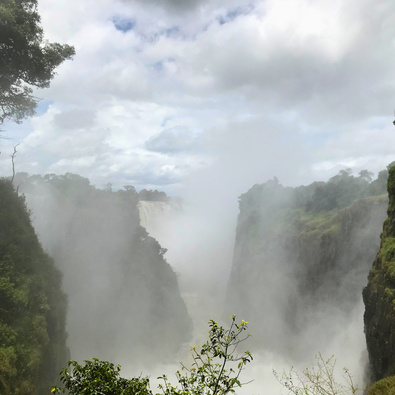
In early December the Zambezi is at its annual floor, around 438 cubic metres a second and just beginning to climb. That is the month to come if you want to understand the Falls rather than simply be hit by them: the basalt face is exposed, you can read the structure of the gorge, and the river is a set of channels rather than a single sheet.
From January it fills. It carries 686 cubic metres a second in January, 1,184 in February and 2,175 by March, climbing towards an April peak of roughly 3,007.
That trajectory is worth understanding, because it means these three months hand you something April cannot. In January you can still see the rock face, read the structure of the gorge and take a photograph in which the Falls are actually visible. By March there is genuine thunder in it and mist rising off the gorge, but you are not yet inside the whiteout that peak flood produces, when the spray is heavy enough that the full width cannot be seen on foot from either bank.
The water arriving in February and March did not fall here. It fell in Angola and western Zambia and crossed the Barotse Floodplain, which takes four to six weeks on its own. That lag is why the Falls go on rising for weeks after our rain has stopped.
- Devil’s Pool , open to late December, then closed until mid-August
- Livingstone Island , same window
- The full rafting descent : Boiling Pot start, rapids 1 to 19, to around 25 December
- The river at its lowest, so the whole rock face and the gorge are visible
- The country turning green after the first rains
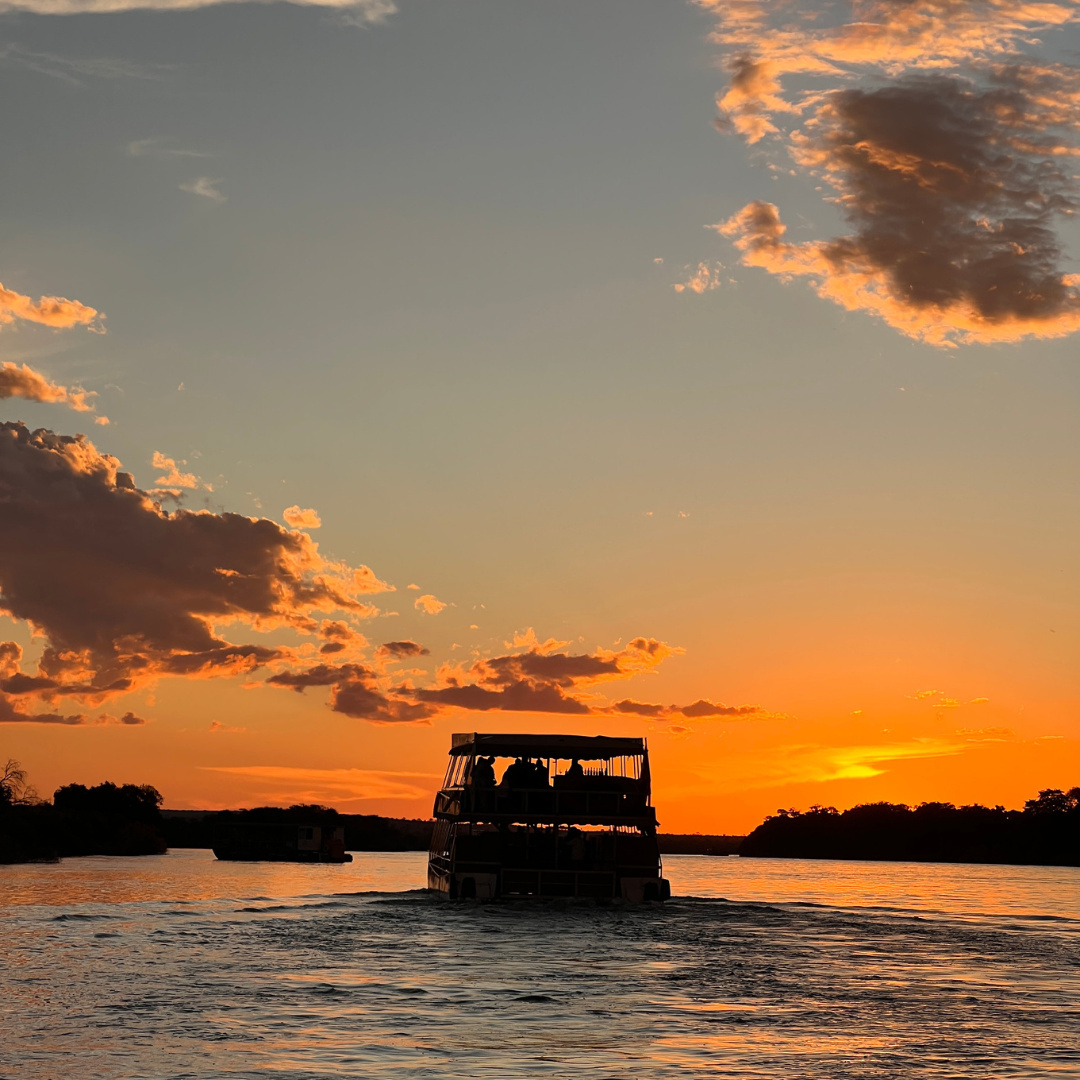
- Sunset cruises on the upper Zambezi, every evening
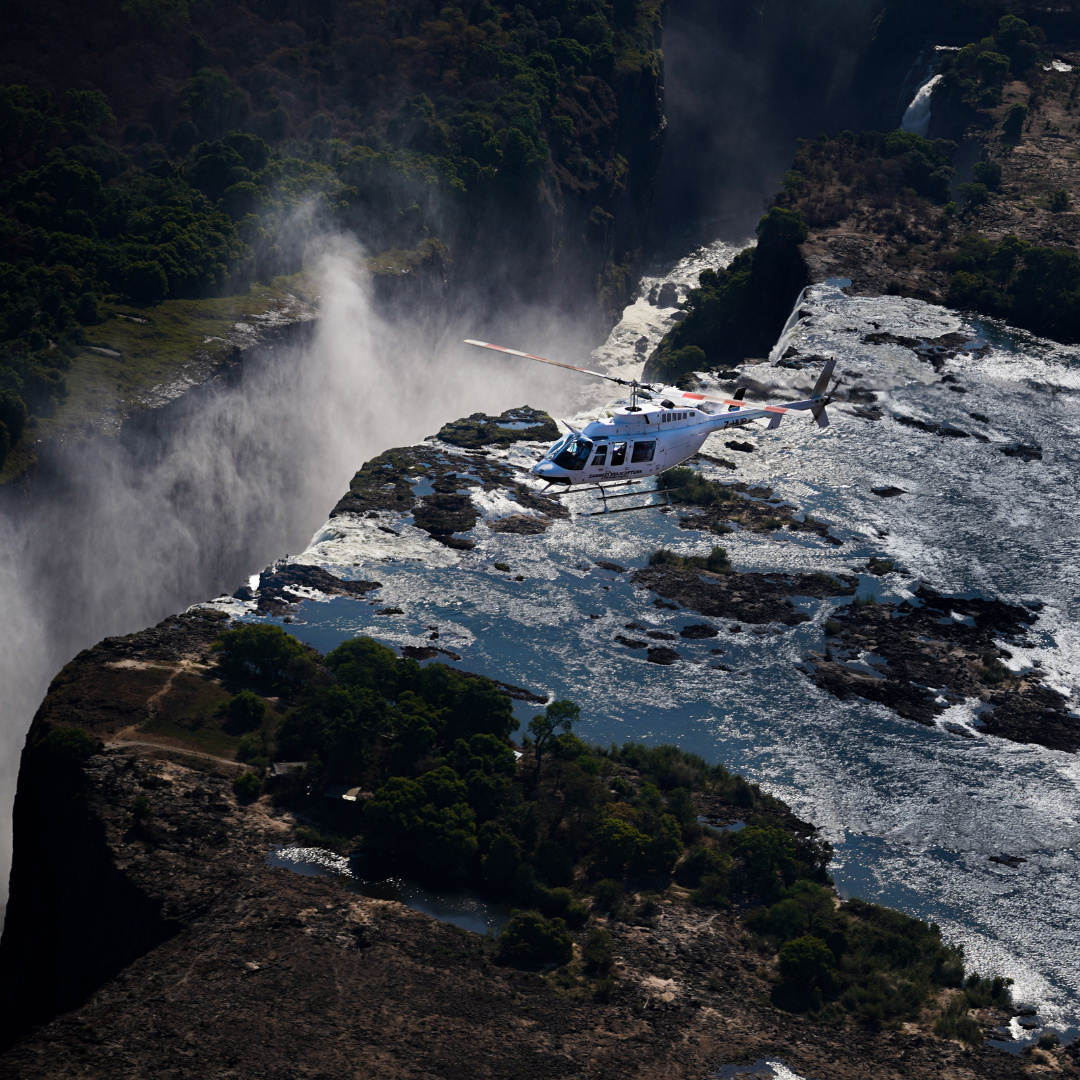
- Helicopter flights over the gorge
- Bungee, gorge swing, zip line, flying fox, canopy tour, bridge tour
- Chobe in Botswana as a day trip, on the KAZA UniVisa
- Exceptional birding: migrants in, in breeding plumage
- The vulture feeding, the Big Tree, Simunye theatre, the galleries
- Our Green Season offer: dinner included, at bed-and-breakfast prices, on stays of three nights or more
- Devil’s Pool and Livingstone Island, until mid-August
- The full rafting run. January to March is the shortened high-water trip from rapid 11
- Easy game viewing: thick bush, water everywhere, animals dispersed
- Comfortable heat – around 30°C and humid, with afternoon storms
- Peak water, which is April and May, not now
The border is easier than you think
The border is easier than you think
Apply before you fly. Zimbabwe issues visas through its own portal at evisa.gov.zw, and that is now the way it is done rather than queuing with cash at the counter. Processing usually takes about seven working days, so give yourself two to three weeks.
If you want both sides of the Falls, the category to look for is the KAZA UniVisa: Zimbabwe and Zambia on one document, and it allows a day trip into Botswana for Chobe. A day trip only: spend a night in Botswana and it lapses. Which category you qualify for, what it costs and whether you need one at all depend on your nationality and the purpose of your visit, and for some nationalities the application is free. Check the portal rather than taking a figure from a website.
You will need a passport photo, a passport valid for at least six months beyond your travel dates, and proof of your booking, which we will send you as soon as you are confirmed. Print two copies of the visa and carry one with your passport. If you would like it step by step, we have a short guide you can download.
What we will not tell you
What we will not tell you
That it is cheaper. Victoria Falls does not really discount by season, and we would rather say so than let you find out.
The park fee at the Rainforest is the same in February as it is in August. So is the helicopter, so is the sunset cruise, so is the rafting. Every operator here prices on the activity, not on the calendar. If you have travelled somewhere that halves its prices out of season, this is not that place.
What actually changes is the river, and what the river opens and closes. That is the whole argument of this page, and it is the only one worth making. Our Green Season offer adds dinner every night of your stay, on stays of three nights or more, because giving you something is more honest than pretending the destination is on sale.
Two ways to put it together
Nine nights in early December, the activity version
Five nights in Cape Town in the first half of the month, before the South African schools break up. Fly up and take four nights with us while Devil’s Pool and the full rafting descent are both still running: the Falls and the Rainforest on your first morning, rafting from the Boiling Pot on day two, Livingstone Island and Devil’s Pool on day three, Chobe on day four. This is the fullest version of Victoria Falls available in any month, and it is also our quietest.
Nine nights in January or February, the straightforward version
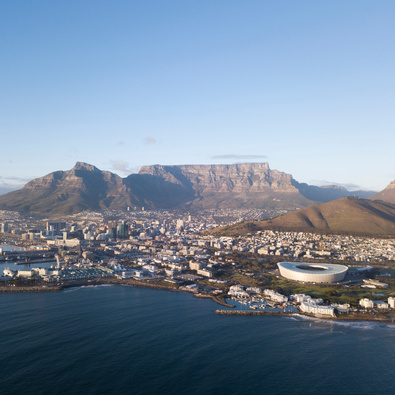
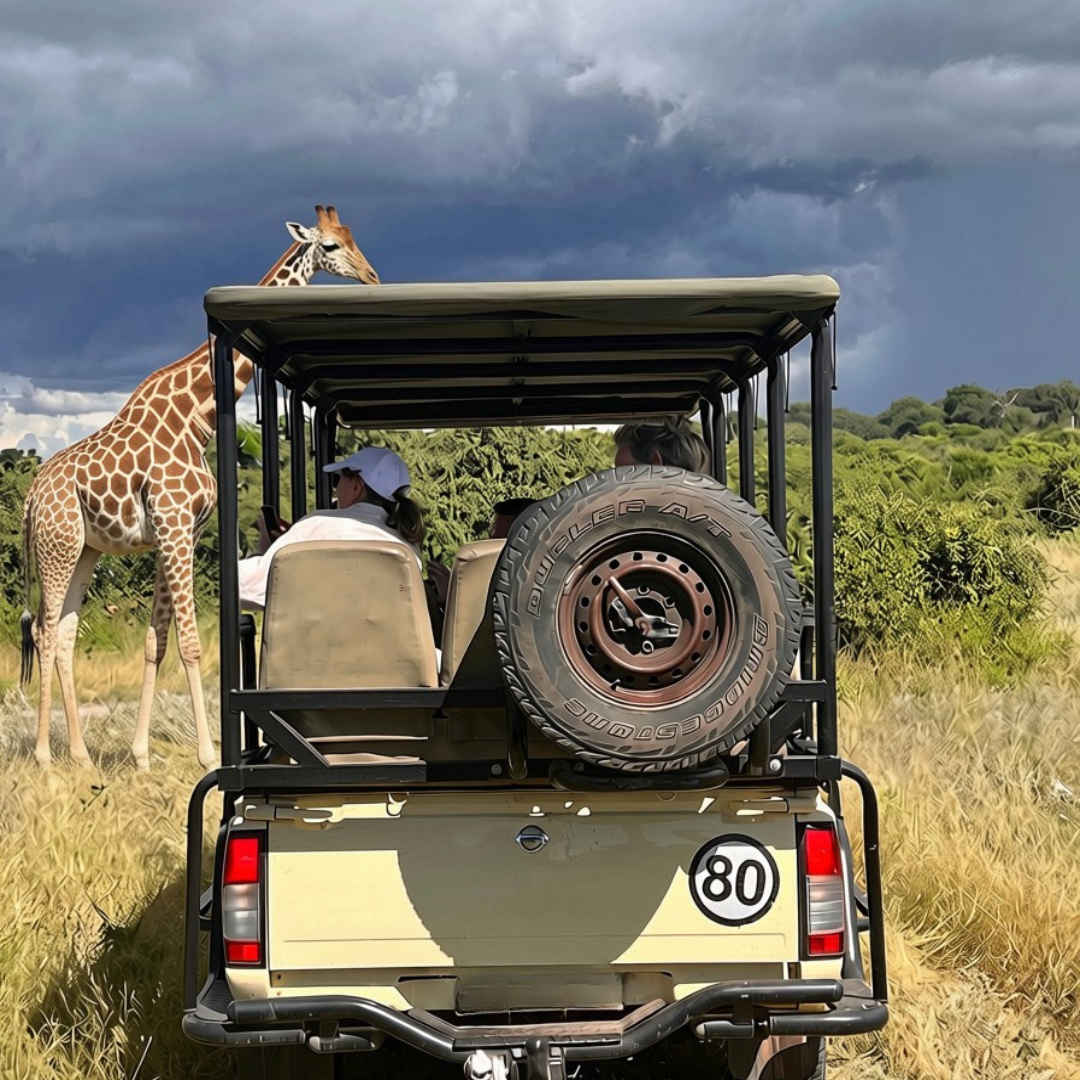
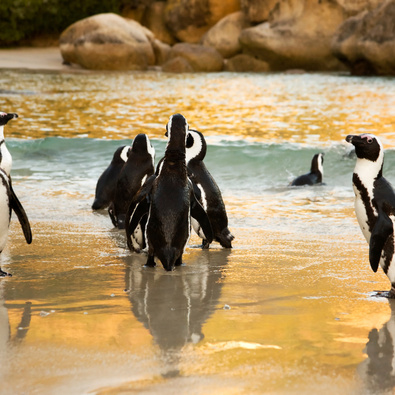
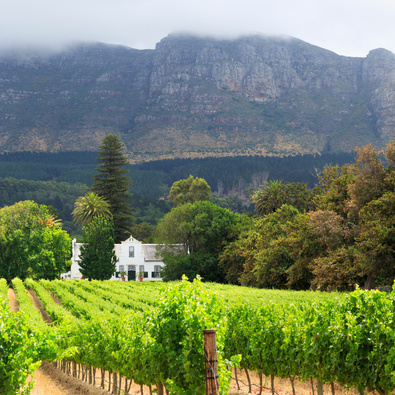
Five nights in Cape Town: Table Mountain, the peninsula, Boulders, a day in the Winelands. Fly out mid-morning on day six and land at Victoria Falls in the early afternoon. Four nights with us: the Falls on your first full morning, a sunset cruise that evening, rafting or the helicopter on day two, Chobe as a day trip on day three, and the fourth left deliberately open, because you will have found something we did not put on the list.
Thirteen nights, with room to breathe
Four nights in Cape Town, two in the Winelands, then back for a night before flying north. Five nights at Victoria Falls: a day across the border into Botswana for Chobe, a morning on the Zambian side at the Knife-Edge, a game drive in the Zambezi National Park a few minutes from our gate, and a lunar-rainbow evening if your dates fall near a full moon. The park opens for three nights each month, the night before, the night of, and the night after.
Fourteen rooms, ten minutes from the Falls
Pamarah Lodge is a fourteen-room boutique hotel on Nguhwuma Crescent in Victoria Falls, Zimbabwe, ten minutes from the Rainforest gate. A pool, a bar called The Prop & Rotor, an activity desk that books everything on this page at no charge, and a Tripadvisor Best of the Best award.
We are a family business and we will give you a straight answer about the lodge, the rooms and what to book. On the river itself, do not take our word for it. The Zambezi River Authority gauges the Zambezi and publishes the measured flow at Victoria Falls every fortnight, which is where the figures on this page come from. Look up the season you are considering and decide for yourself: zambezira.org/hydrology/river-flows
Read next
Getting Here
The two hours and fifty-five minutes is the easy part. Which hub to use if the day you want is full, what the Livingstone alternative really involves, and the driving times to Chobe, Hwange and the Zambian side.
Before You Arrive
Five things worth sorting before you fly, and only one of them has a deadline. Small United States dollar notes, the visa that takes about seven working days, and the activities that genuinely sell out.
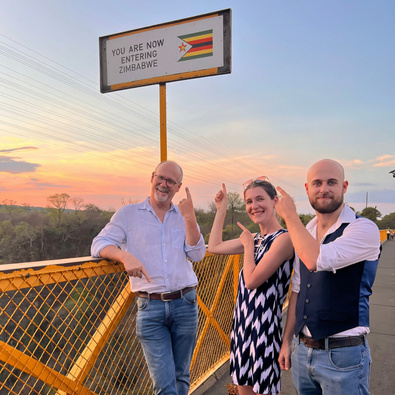
Visas and Borders
One ticket, three countries, and the KAZA UniVisa that covers them. Where to ask for it, why taking it on the Zambian side will not cover a stay with us, and the birth certificate Botswana wants for anyone under eighteen.

Green Season - Dinner, Bed & Breakfast at Bed & Breakfast Prices
Bed & Breakfast
BB Longer=cheaper up to 10% off
Dinner, Bed & Breakfast
HB Longer=cheaper up to 10% off
7 Night Spectacular Package for 2 Guests
3 Night First Class Package for 2 Guests
3 Night Business Class Package for 2 Guests
3 Night Economy Class Package for 2 Guests